LA TRAVERSÉE
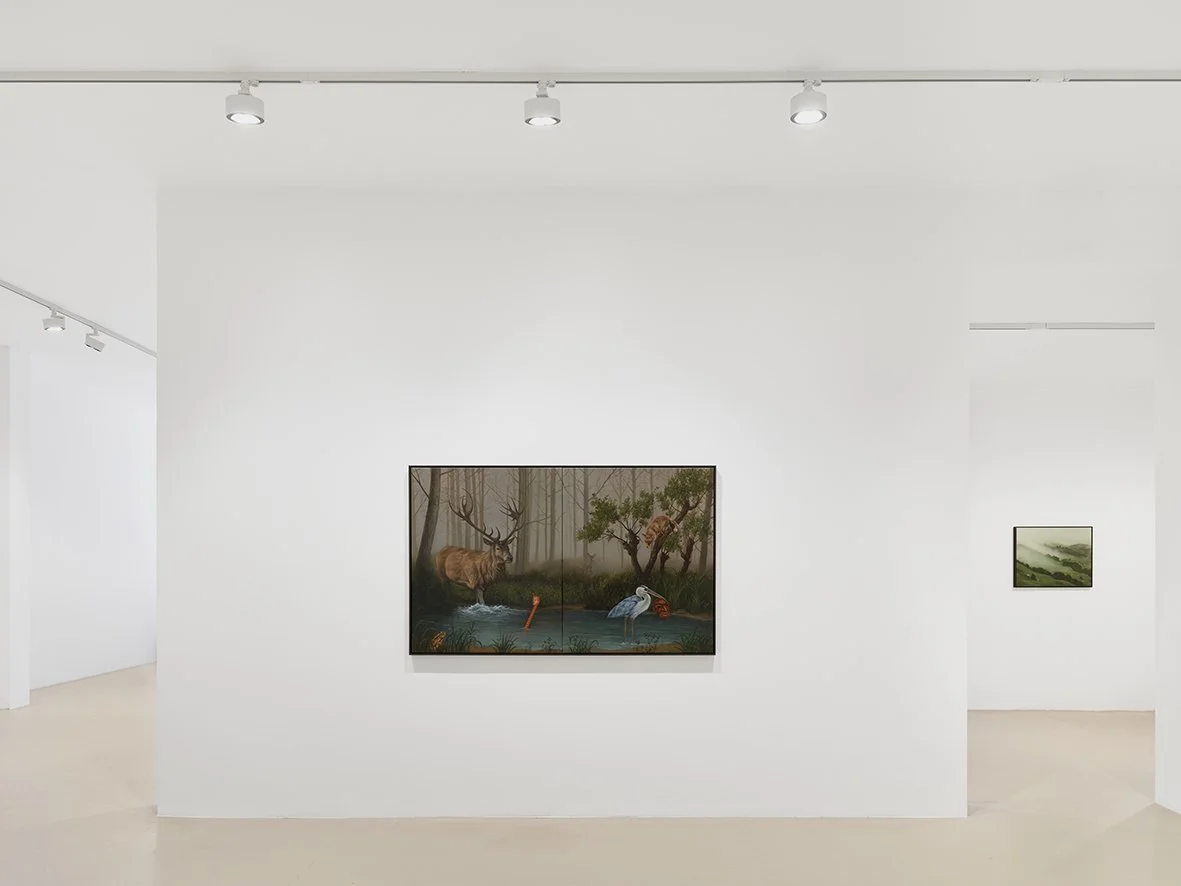
Avec La traversée, Keteleer Gallery présente la quatrième exposition personnelle d’Antoine Roegiers (né en 1980 à Braine-l’Alleud, Belgique). Installé à Paris, l’artiste porte en lui une mémoire belge qui affleure dans sa peinture. On y perçoit, comme un souffle lointain, l’ombre de Pieter Bruegel l’Ancien et de James Ensor — non comme une citation, mais comme un climat intérieur.
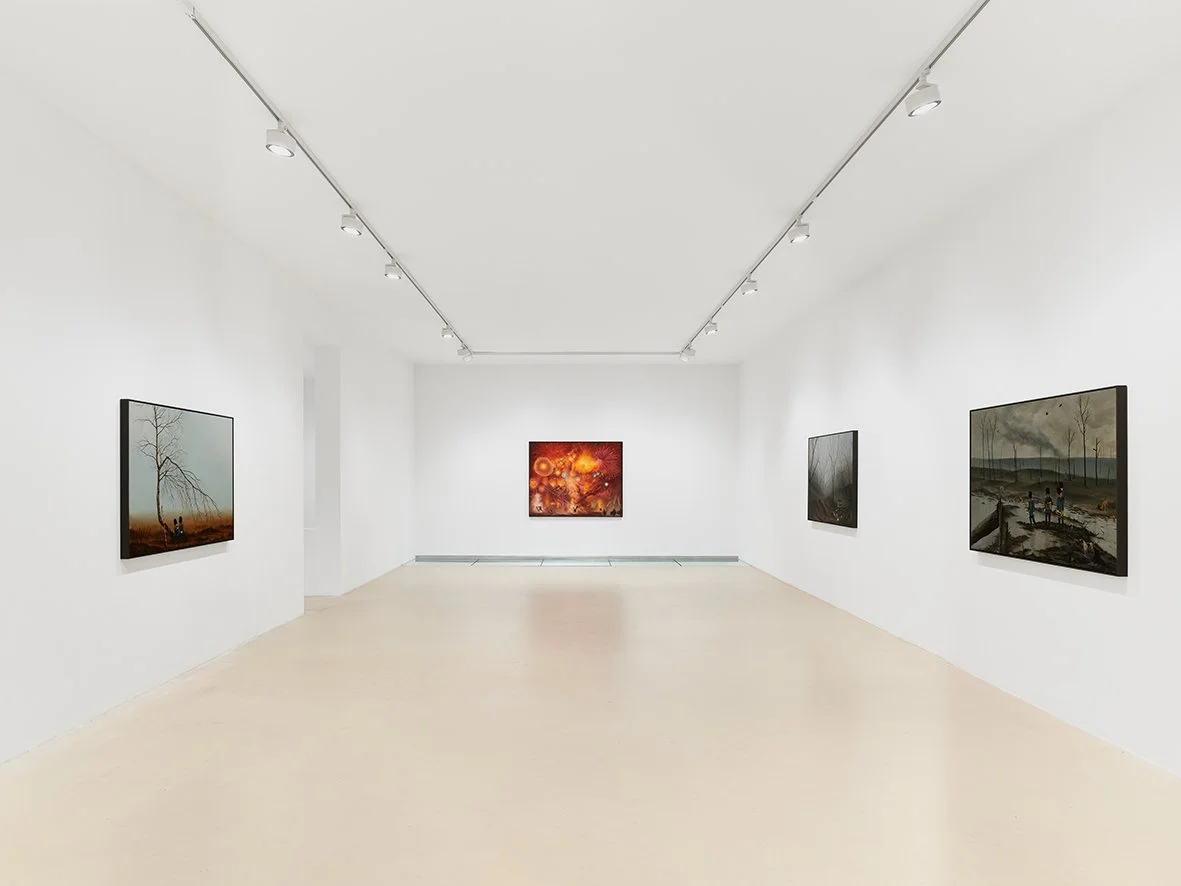
Depuis plusieurs années, Roegiers construit un monde. Ses peintures ne se referment jamais sur elles-mêmes : elles prolongent un récit souterrain où formes et figures réapparaissent, se déplacent et se transforment. Chaque œuvre est autonome, mais toutes participent à une même histoire en expansion.
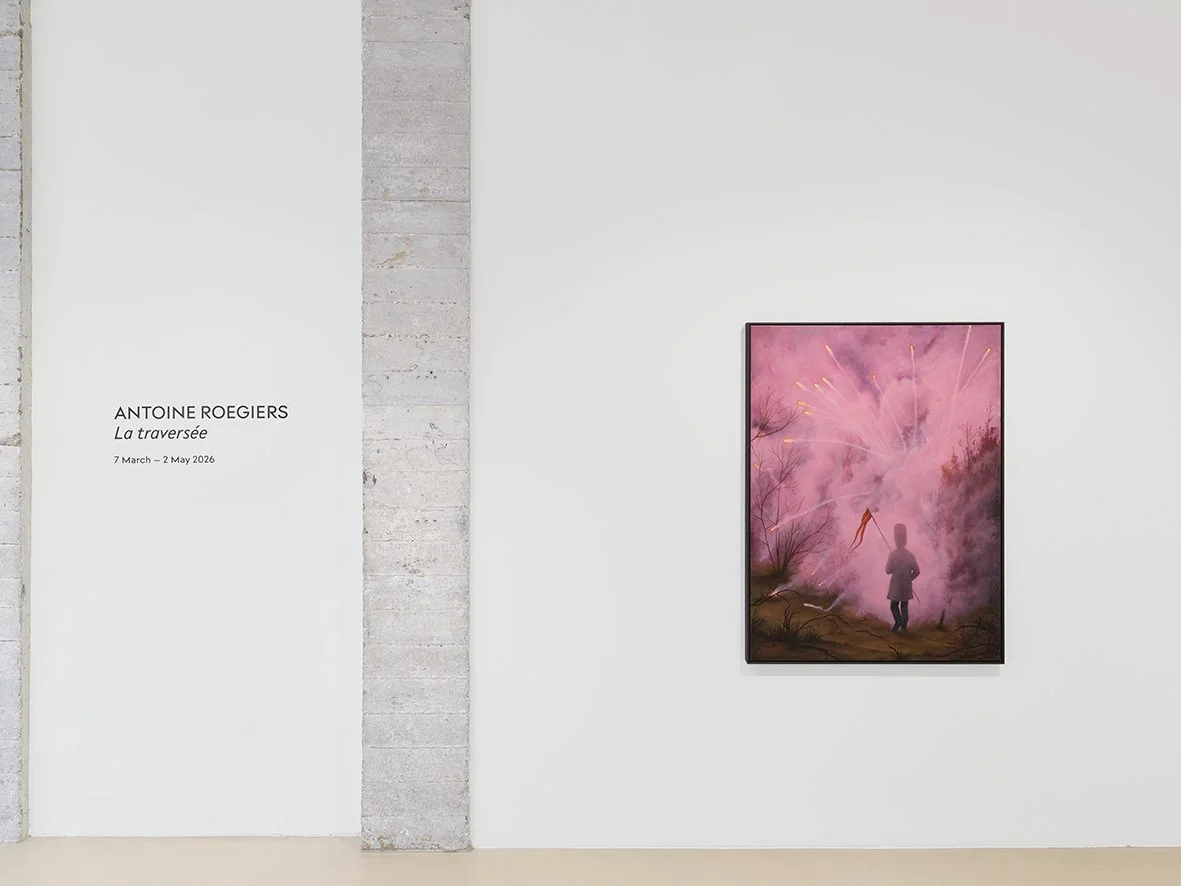
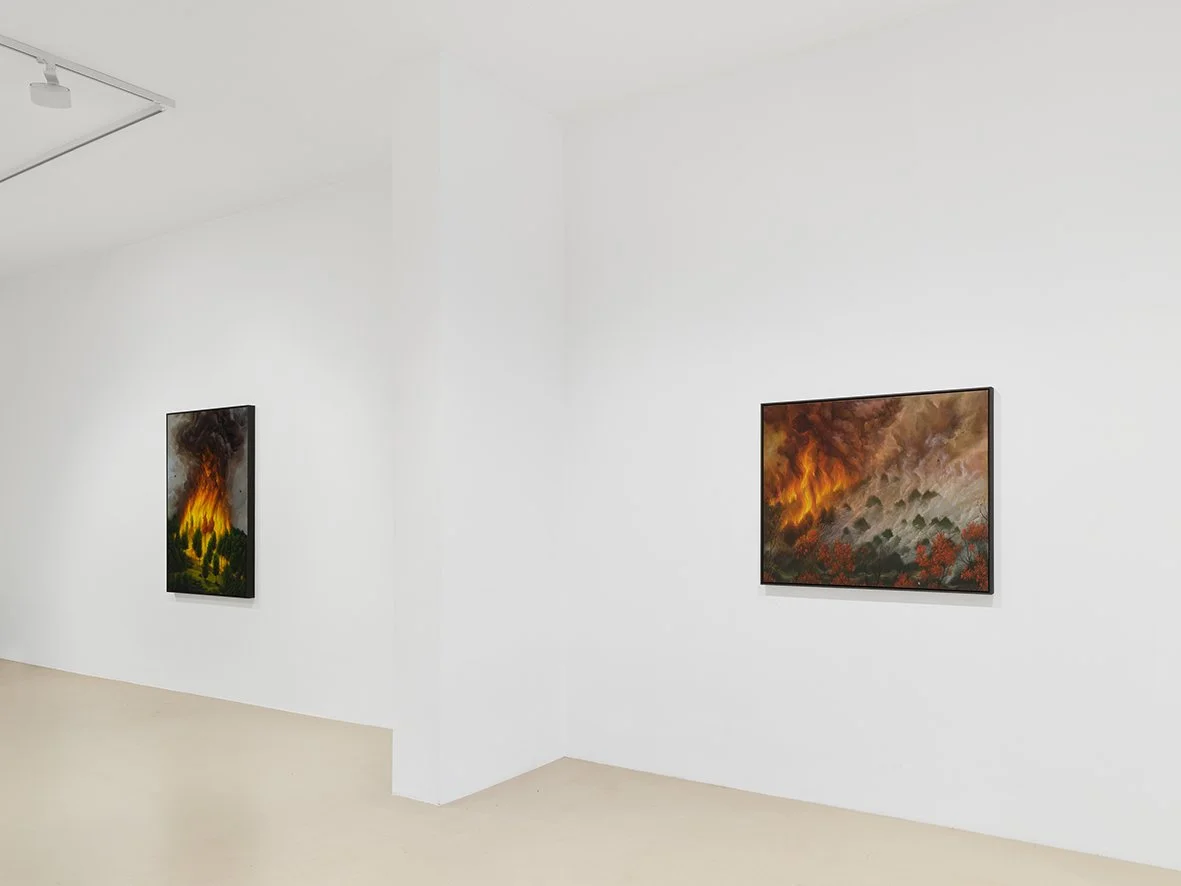
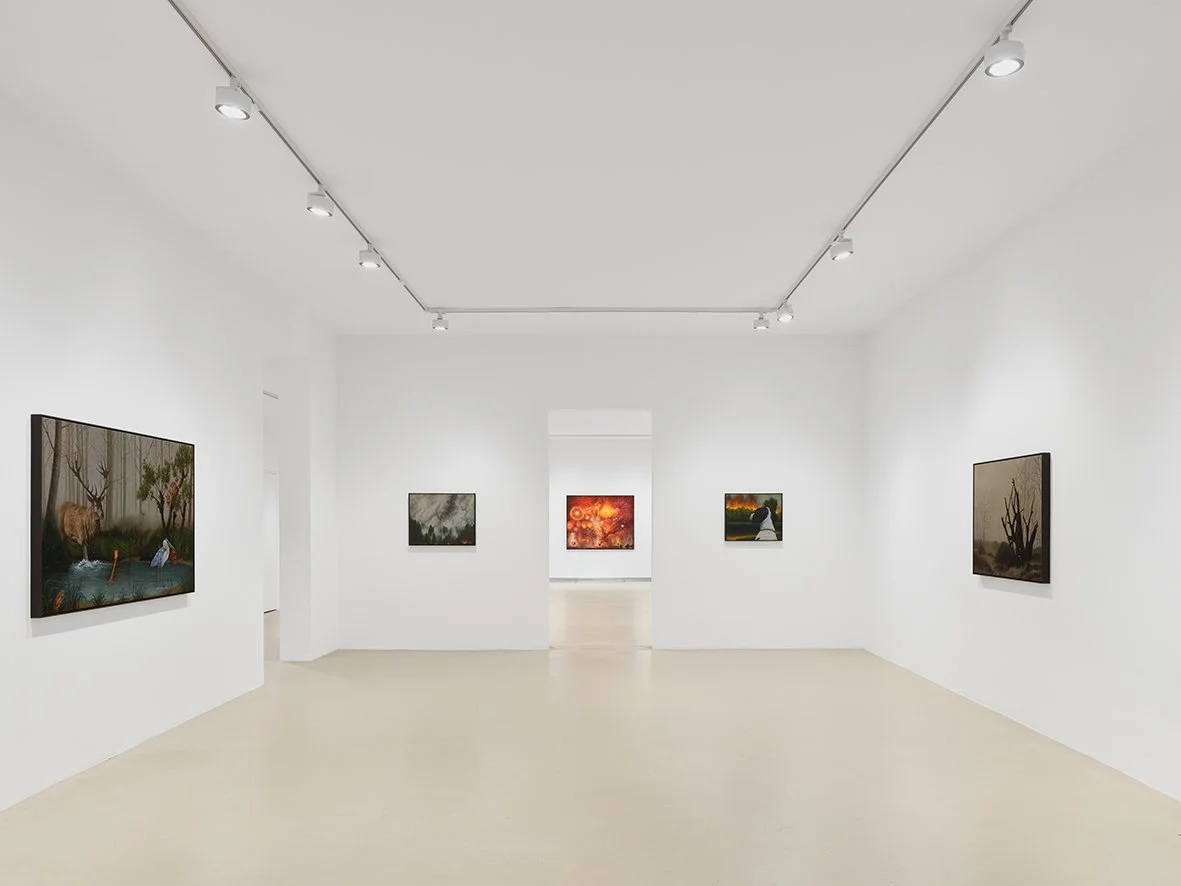
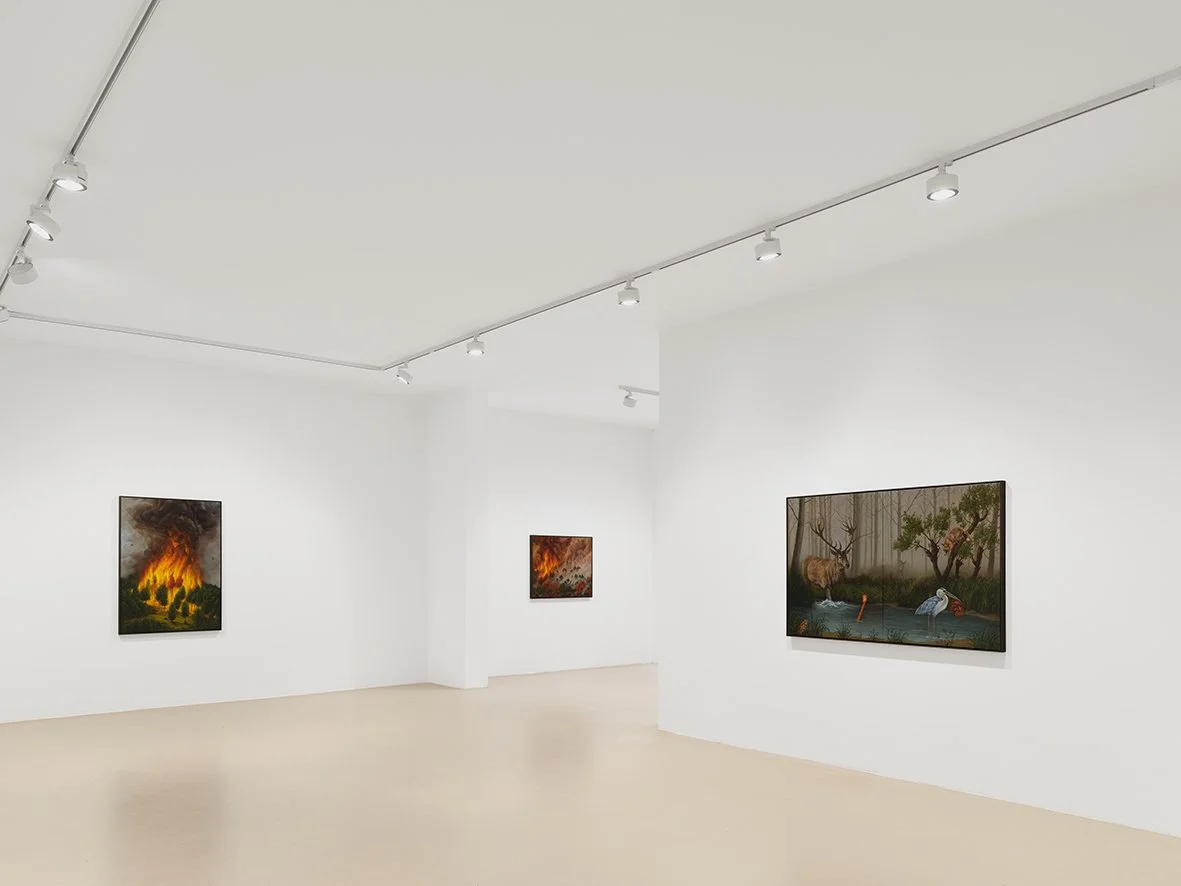
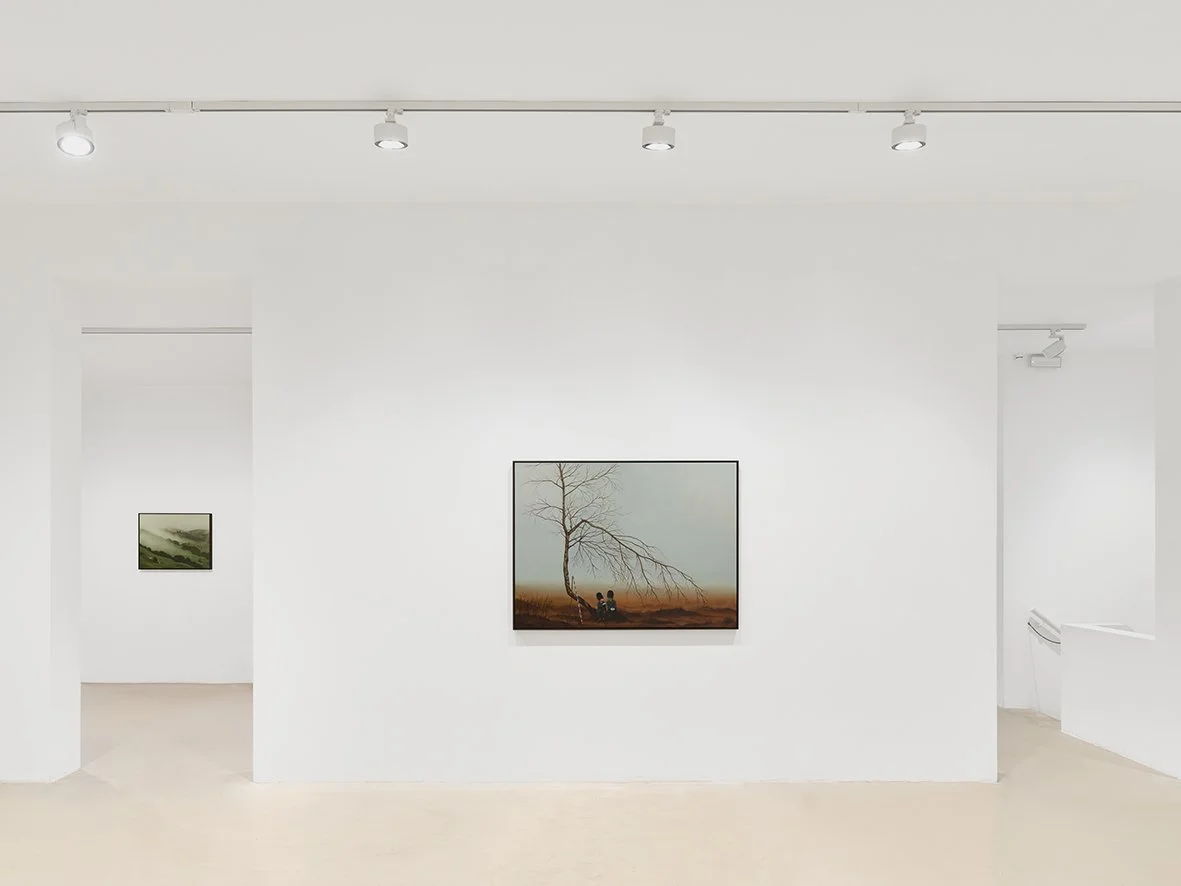
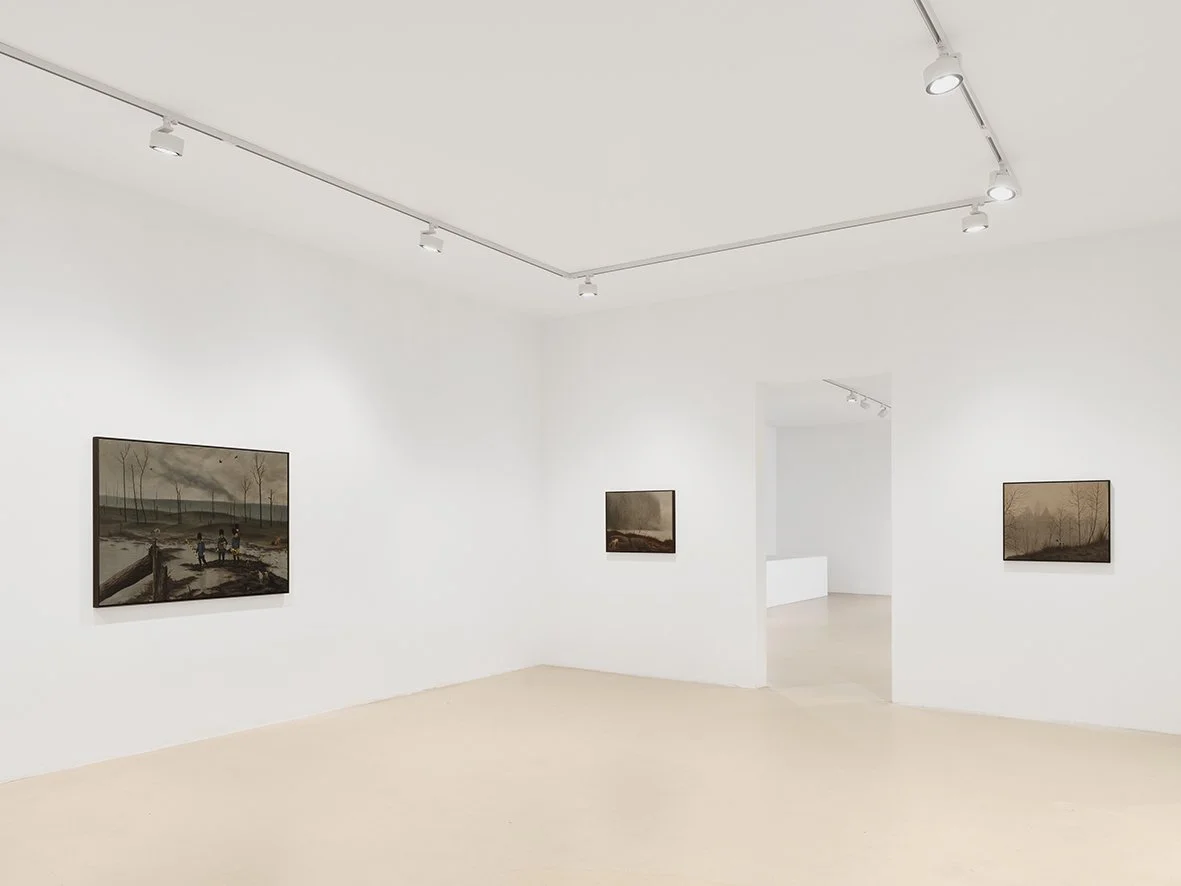
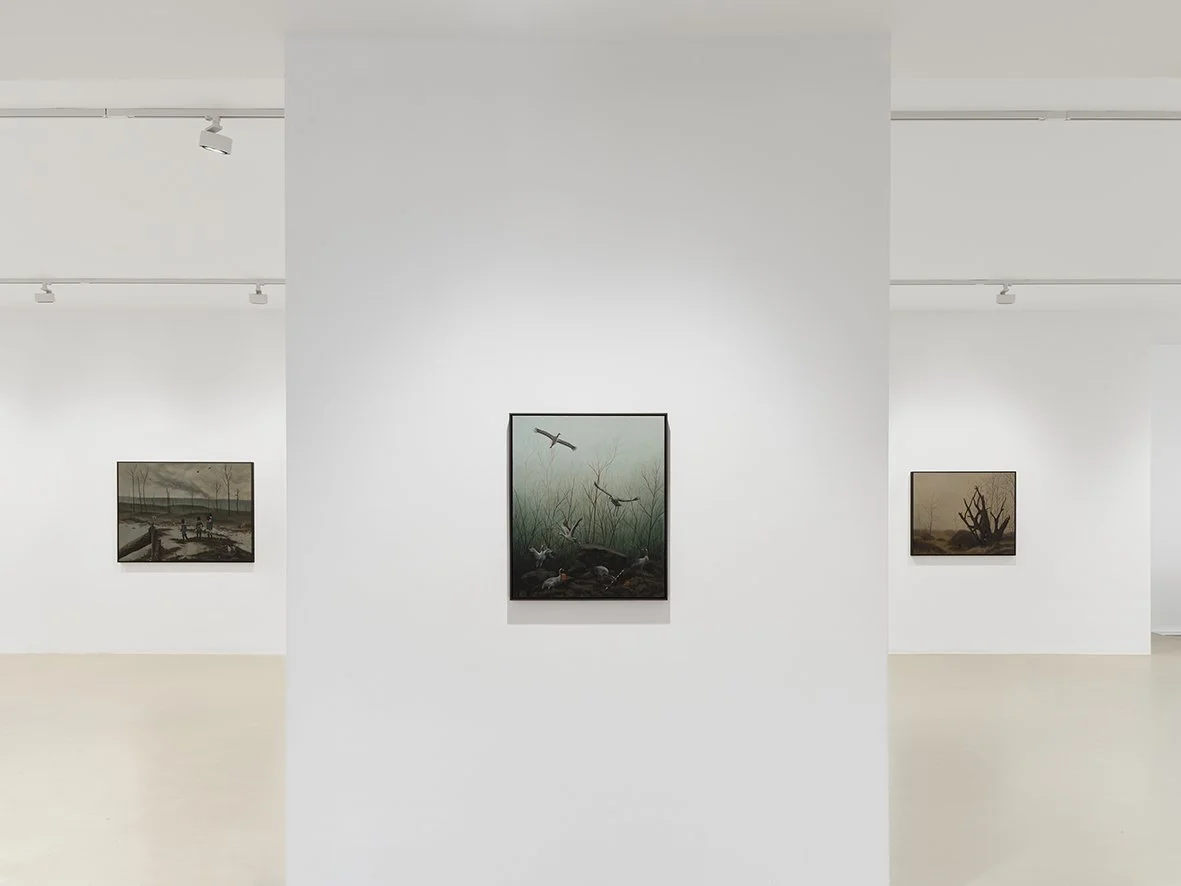
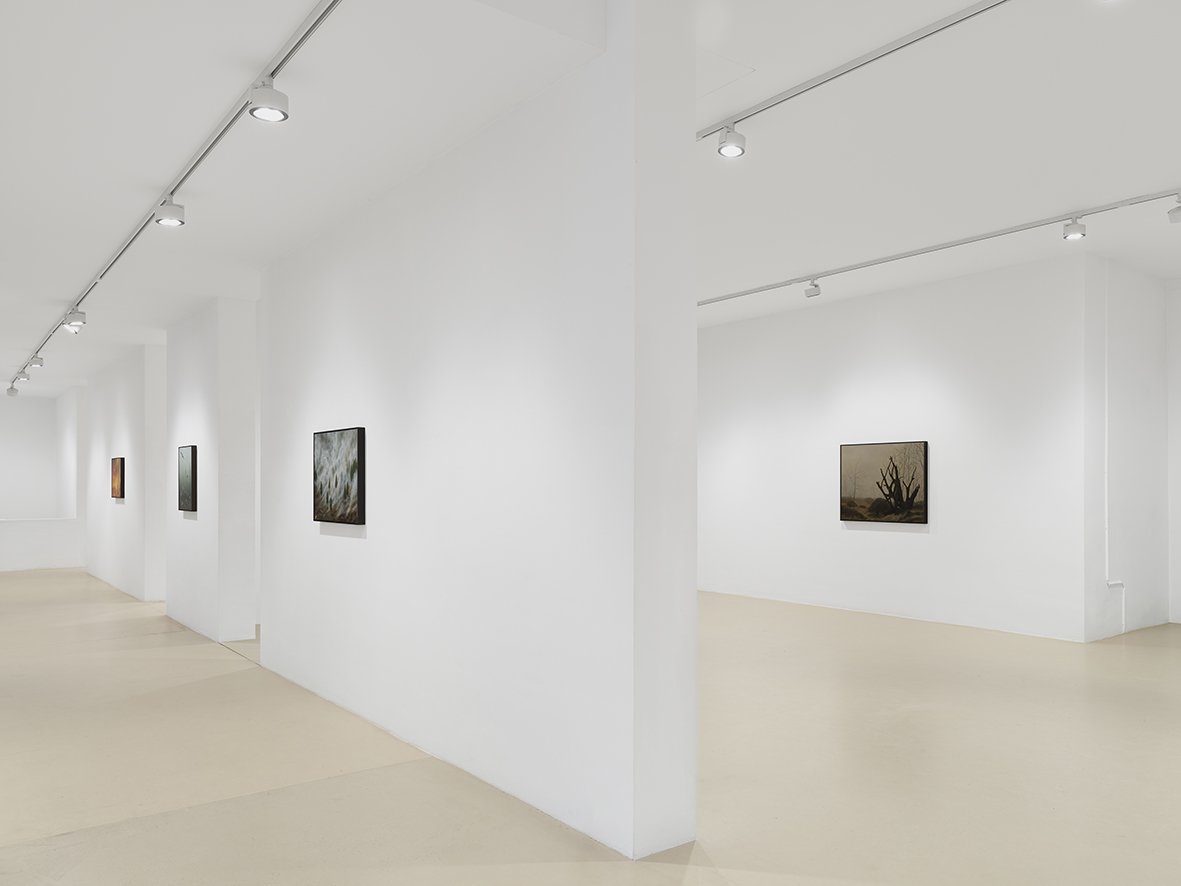
Les peintures récentes — présentées dans cette exposition — évoquent un temps d’après. Le feu s’est éteint, la fumée se dissipe. Les paysages portent les traces de ce qui a eu lieu. Silhouettes et animaux reviennent, presque innocents. La fanfare s’est dispersée. Ce qui demeure, c’est une hésitation, un passage. Une immobilité traversée par le mouvement.
Le Passage (2025) occupe ici une place charnière. Éprouvé et longuement traversé, il marque moins une fin qu’un seuil. La peinture semble ici basculer, s’ouvrant sur une transformation plus profonde. La traversée devient ainsi à la fois le sujet des images et une métaphore du parcours de l’artiste.
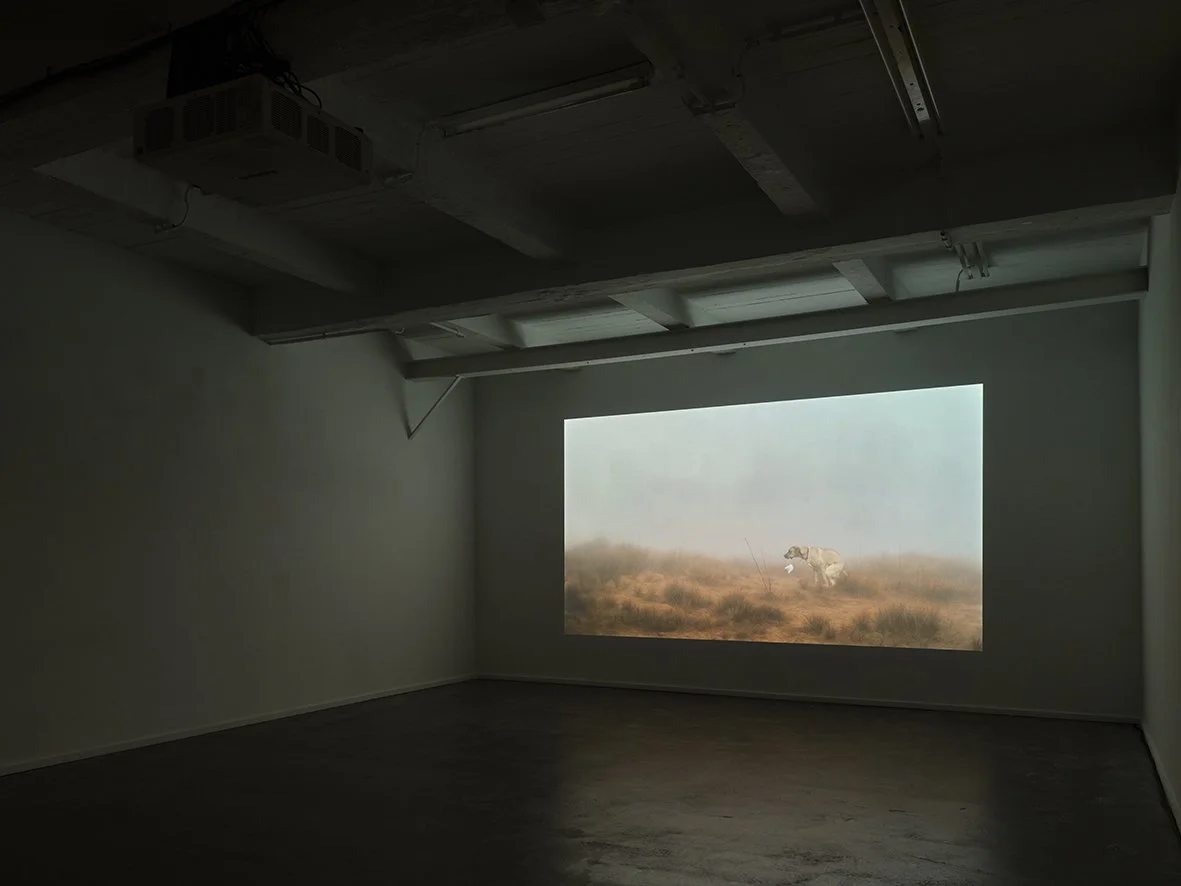
En parallèle, Roegiers développe un travail de vidéo et d’animation, présenté à l’étage inférieur. À partir d’images minutieusement élaborées issues de ses peintures, il met ses images en mouvement, intégrant désormais l’intelligence artificielle à son processus. Ces films ne constituent pas un médium séparé : ils prolongent la peinture. Ce qui était suspendu dans l’image se déploie dans le temps. L’artiste entre littéralement dans son propre espace pictural. Comme il le dit lui-même, c’est « le plaisir de donner vie à ces images et d’y entrer ».
Ses œuvres entrent en résonance avec les tensions contemporaines — crise écologique, fragmentation sociale, perte de sens collectif — sans jamais s’y réduire. Elles apparaissent avant tout comme des paysages mentaux, habités de figures masquées, d’indices et de fragments d’histoire. Le familier devient étrange.
La traversée ouvre ainsi un espace d’expérience : un monde cohérent mais poreux, où le récit demeure intentionnellement inachevé.
Kathy de Nève, 2026
Photographies : Alexey Shlyk
With La traversée, Keteleer Gallery presents the fourth solo exhibition of Antoine Roegiers (b. 1980, Braine-l’Alleud, BE). Based in Paris, the artist carries within him a Belgian memory that surfaces in his painting. One perceives, like a distant breath, the shadow of Pieter Bruegel the Elder and James Ensor—not as a quotation, but as an inner climate.
For several years, Roegiers has been constructing a world. His paintings never close in on themselves: they extend an underground narrative where forms and figures reappear, move, and transform. Each work is autonomous, yet all participate in the same expanding story.
The recent paintings—seen in this exhibition—evoke a time after. The fire has gone out, the smoke is dissipating. The landscapes bear the traces of what has occurred. Silhouettes and animals return, almost innocent. The band has dispersed. What remains is hesitation, a passage. A stillness crossed by movement.
Le Passage (2025) occupies a pivotal place here. Tested and long traversed, it marks less an end than a threshold. Painting seems to tilt here, opening onto a deeper transformation. La traversée thus becomes both the subject of the images and a metaphor for the artist’s journey.
In parallel, Roegiers develops work in video and animation, presented on the lower floor. From meticulously crafted images based on his paintings, he sets his images in motion, now integrating artificial intelligence into his process. These films do not constitute a separate medium: they extend painting. What was suspended in the image unfolds over time. The artist literally enters his own pictorial space. As he himself puts it, it is “the pleasure of giving life to these images and entering them.”
His works resonate with contemporary tensions—ecological crisis, social fragmentation, loss of collective meaning—without ever being reduced to them. Above all, they appear as mental landscapes, inhabited by masked figures, clues, and fragments of history. The familiar becomes strange.
La traversée thus opens a space of experience: a coherent yet porous world, where the narrative remains intentionally unfinished.
Kathy de Nève, 2026
Photographs by Alexey Shlyk